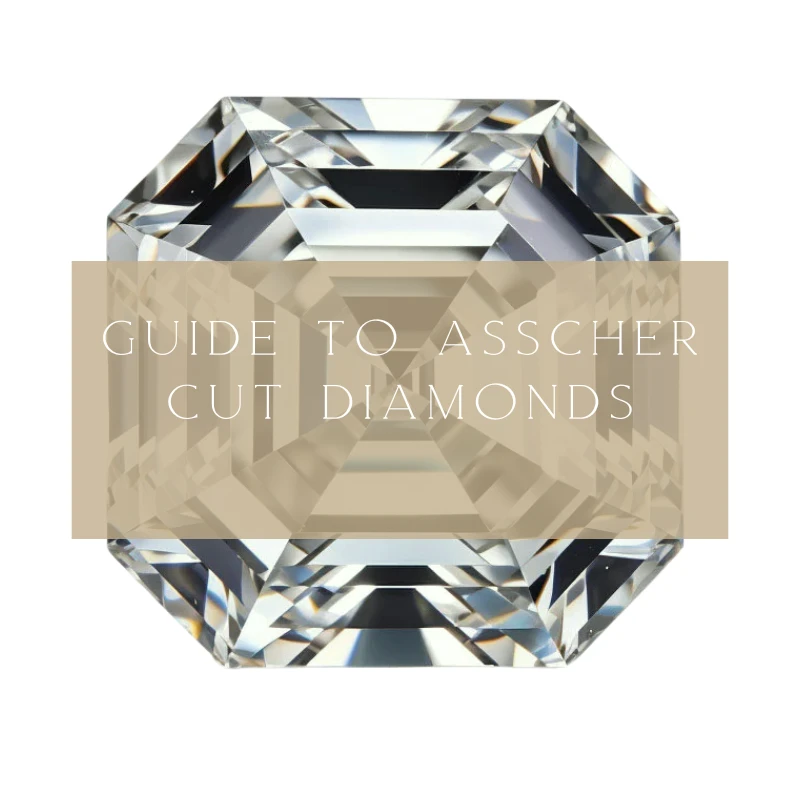
The Asscher cut diamond is a bold and structured shape that exudes vintage charm and quiet sophistication. Often referred to as the square cousin of the emerald cut, the Asscher shares the same step-cut faceting and open table, but its square outline and concentric patterning give it a deeper, more architectural appearance.
With clean lines, clipped corners, and a mesmerising depth, the Asscher cut is ideal for those drawn to symmetry, clarity, and timeless Art Deco design.
The Story of the Asscher Cut
First introduced in 1902 by the Asscher brothers in Amsterdam, the Asscher cut was developed as a variation of the emerald cut—but reimagined in a square shape. With its layered, stair-like facets and dramatic depth, the cut quickly gained popularity in early 20th-century jewellery.
Most Asscher diamonds are cut with 58 step facets, arranged in a way that creates a “hall of mirrors” effect, drawing light inward and producing flashes of brilliance across the stone. Though less fiery than brilliant cuts, the Asscher’s appeal lies in its clarity and depth of pattern.
What to Look for in an Asscher Cut Diamond
Because of their open tables and step-cut design, Asscher cut diamonds are less forgiving of flaws. They require high clarity and precise symmetry to truly shine.
Colour
Colour is more visible in Asscher cuts than in brilliant shapes, particularly in the open centre.
Experts typically recommend choosing a diamond in the G–H colour range, which appears bright and white to the eye. For platinum or white gold settings, you may prefer a D–F grade for a more colourless look.
Clarity
Step cuts make inclusions easier to see, especially when they appear near the centre of the diamond. The clarity of the stone should therefore be prioritised.
Stones in the VS–SI clarity range can still appear clean, depending on the location of the inclusions. For extra assurance, especially in larger stones, VS1 or above is advisable.
Cut
GIA does not assign a cut grade to Asscher diamonds, so it’s essential to visually inspect the stone for symmetry and proportion.
Look for a diamond with a length-to-width ratio close to 1.00 for a square appearance. The step facets should form clear, concentric layers, and the cropped corners should be balanced and even.
An uneven outline or poorly aligned facet structure will quickly diminish the visual appeal of this cut.