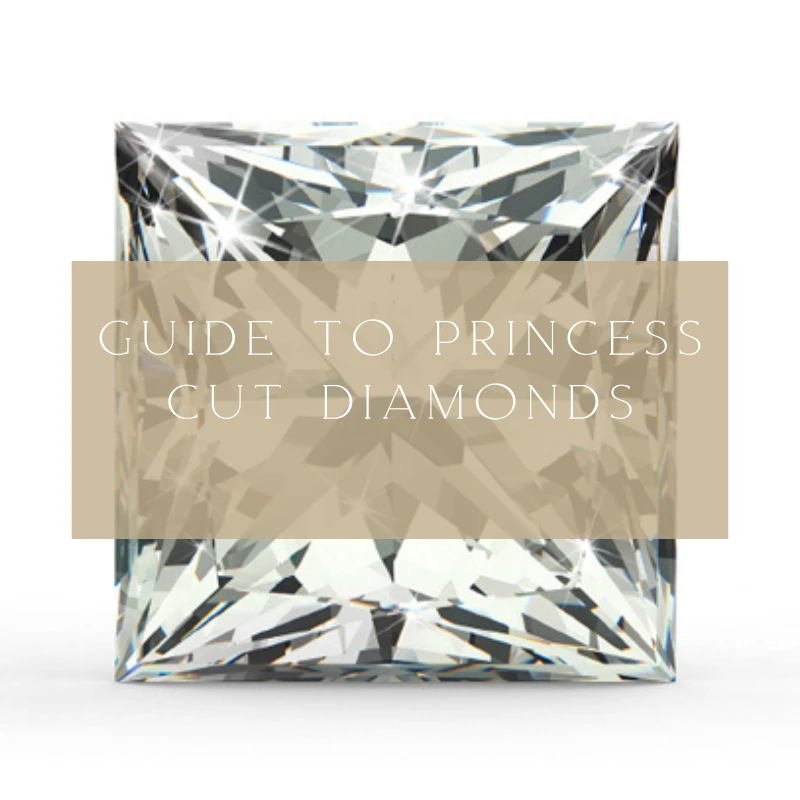
The princess-cut diamond is a bold, angular stone that blends modern brilliance with geometric symmetry. Most often cut into a perfect square, this shape is second only to the round brilliant in popularity. With its sharp corners and dazzling light return, the princess cut has become a favourite among those seeking a contemporary yet timeless look.
To the eye, the princess cut appears clean, radiant, and architectural—offering brilliance and structure in equal measure. Designed to maximise sparkle while retaining a sharp silhouette, it stands as the most brilliant of all square cuts.
The Story of the Princess-Cut
Although the shape feels modern, the princess cut was first introduced in the 1970s as a more efficient, angular alternative to the round brilliant. Its origins lie in the earlier profile and Barion cuts, but it was the introduction of the now-standard 57–76 facet princess design that brought this diamond shape into the mainstream.
Thanks to its brilliant-style faceting, the princess cut maintains exceptional fire and scintillation, similar to the round cut—but in a square silhouette. This, paired with its ability to retain more carat weight from the rough, has made it a popular and cost-effective choice.
What to Look for in a Princess-Cut Diamond
Princess-cut diamonds are prized for their sharp corners and clean symmetry. Their square outline and brilliant sparkle make them an ideal choice for a sleek, modern ring—but there are a few important factors to consider before purchasing.
Colour
Due to their faceting, princess-cut diamonds may show slightly more colour than round brilliants, particularly in the corners.
Most experts recommend choosing a diamond in the G–H colour range, which appears colourless to the naked eye. In warmer settings like yellow or rose gold, a stone in the I range can still offer a pleasing contrast and good value.
Clarity
While the brilliant cut helps hide minor inclusions, the sharp corners of the princess shape are particularly vulnerable to damage—especially if an inclusion is located in those areas.
We recommend looking for diamonds in the VS–SI clarity range, with special attention paid to the corners. Ensure that the stone appears clean to the naked eye and that any inclusions won’t compromise the diamond’s structure.
Cut
As with most fancy cuts, GIA does not assign a cut grade to princess-cut diamonds, so visual inspection is key. A well-cut princess diamond will be symmetrical, with even sparkle and minimal darkness.
The most important detail is symmetry. Look for a square shape with a length-to-width ratio of 1.00 to 1.05. Ratios above this may result in a rectangular appearance that strays from the classic princess look.
Be mindful of the diamond’s corners—these should be protected in the setting to avoid chipping, often with a prong or claw-style mount.