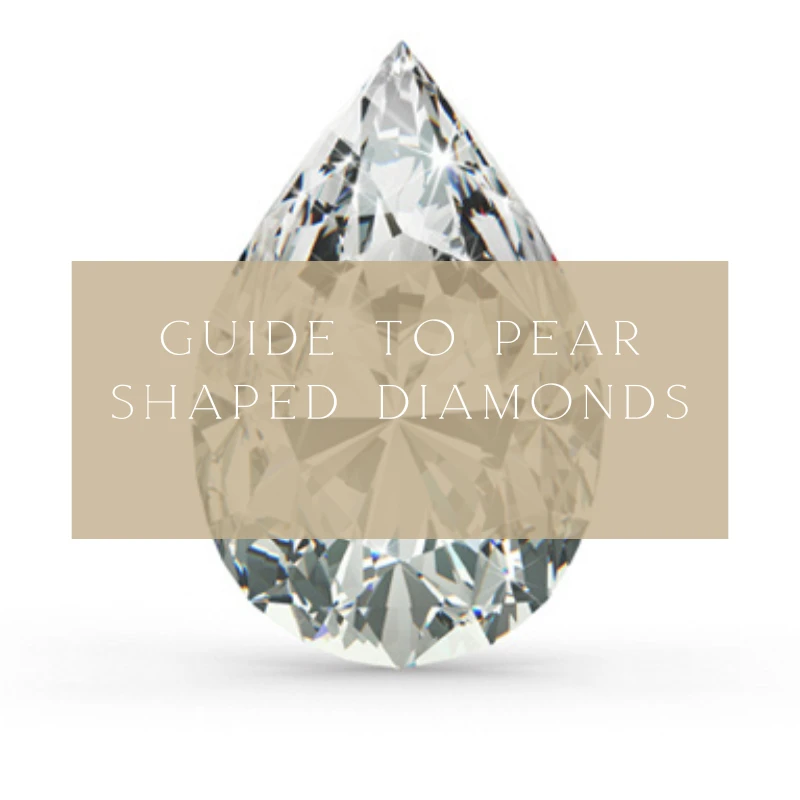
The pear-shaped diamond, also known as the teardrop cut, has been in circulation since the 15th century, when Flemish polisher Lodewyk van Berquem pioneered the use of symmetrical faceting. This innovation led to greater brilliance and paved the way for what would become the modern pear cut.
Typically cut with 56 to 58 facets, the pear shape is a modified brilliant cut, meaning it reflects light similarly to round diamonds. Its asymmetrical form gives it a unique charm, though it also requires greater attention to balance and symmetry.
What to Look for in a Pear-Shaped Diamond
Because of its uneven shape, the pear cut demands careful inspection. Both light performance and proportions can vary significantly from stone to stone.
Colour
Pear-shaped diamonds may show colour more visibly at the pointed tip, where the stone is shallower. For this reason, experts usually recommend selecting a diamond in the G–H colour range, which appears colourless to the naked eye.
If set in yellow or rose gold, stones in the I range may still appear bright due to the warmth of the metal.
Clarity
The brilliant cut faceting helps hide inclusions, especially near the rounded end. However, inclusions near the tip can be more visible—and the point itself is the most fragile part of the diamond.
We suggest focusing on diamonds in the VS–SI clarity range that are eye-clean. Avoid inclusions located at or near the tip, and always choose a protective setting, such as a claw or V-prong, to reduce the risk of chipping.
Cut
As with other fancy shapes, the GIA does not provide a cut grade for pear-shaped diamonds, so proportions and symmetry are key.
A pleasing length-to-width ratio generally falls between 1.45 and 1.75, depending on whether you prefer a wider or more slender silhouette. The two sides of the diamond should curve evenly, and the point should align with the centre of the rounded end.
All pear cuts will show some degree of bowtie effect (a dark shadow in the centre), but a well-cut stone will minimise this.