.webp)
Most people spend weeks thinking about carat, cut and clarity, then decide on the metal at the very last step, almost as an afterthought. It deserves more attention than that. The metal colour you choose does not just frame your diamond. It changes how the diamond actually looks to the eye: warmer, cooler, brighter, softer. Get the pairing right, and the stone looks its absolute best. Get it wrong, and even a beautifully cut diamond can look duller than it is.
Why Metal Colour Matters More Than You Think
A diamond is not viewed in isolation. It sits inside a setting, and that setting sits against your skin. Light bounces between the stone and the metal around it, so the metal's colour subtly influences the colour you perceive in the diamond itself, particularly around the edges and in the reflections near the prongs.
This matters most for diamonds that sit closer to the middle of the colour scale. A diamond graded D to F (colourless) will look exceptional in almost any setting. A diamond graded further down the scale, say J or K, will behave very differently depending on what it is set in. Understanding this relationship helps you get more diamond for your budget, without ever compromising on how the piece actually looks on the hand.
Platinum and White Gold: A Cool, Neutral Frame
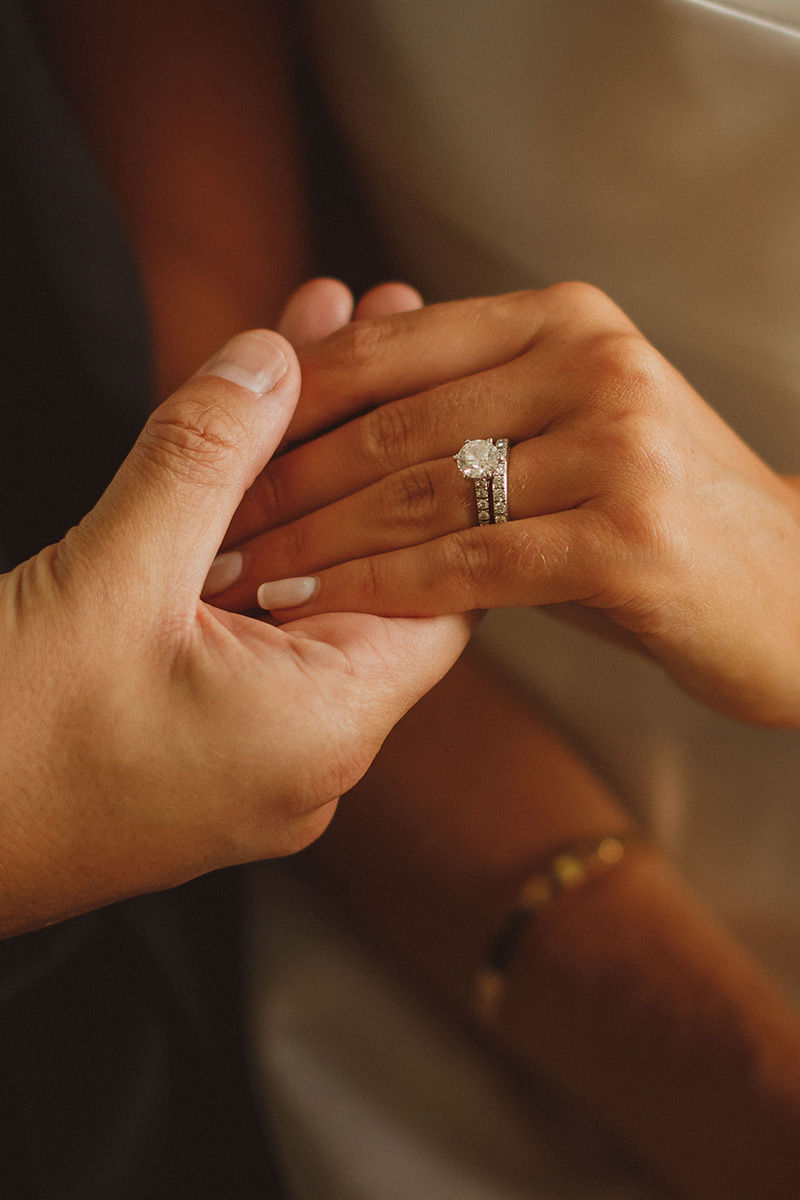
Platinum and white gold share a similar visual effect, though they are different metals with different properties. Both offer a cool, neutral backdrop that lets a diamond's own brilliance take centre stage. Nothing is added, nothing is masked.
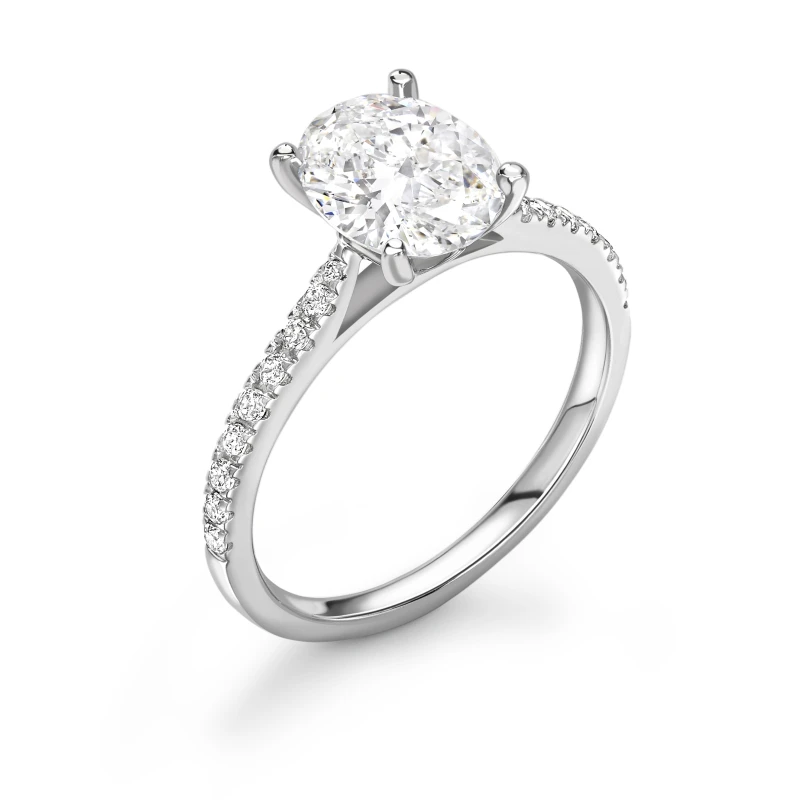
This makes white metals the natural choice for diamonds with strong colourless or near-colourless grades (D to G). The setting stays out of the way and lets the diamond's natural white light do the talking. It is also why white metals are the more forgiving choice if you are prioritising size or clarity within a set budget. A diamond with a slightly warmer grade will show that warmth more visibly in a white setting than it would elsewhere.
Platinum and white gold are not identical, though. Platinum is naturally white and keeps that colour for life. White gold is rhodium-plated to achieve its bright white finish, and that plating will need occasional refreshing over the years. It's something we explain fully during an appointment, and something covered under our free lifetime service.
Yellow Gold: Warmth That Can Flatter Certain Diamonds
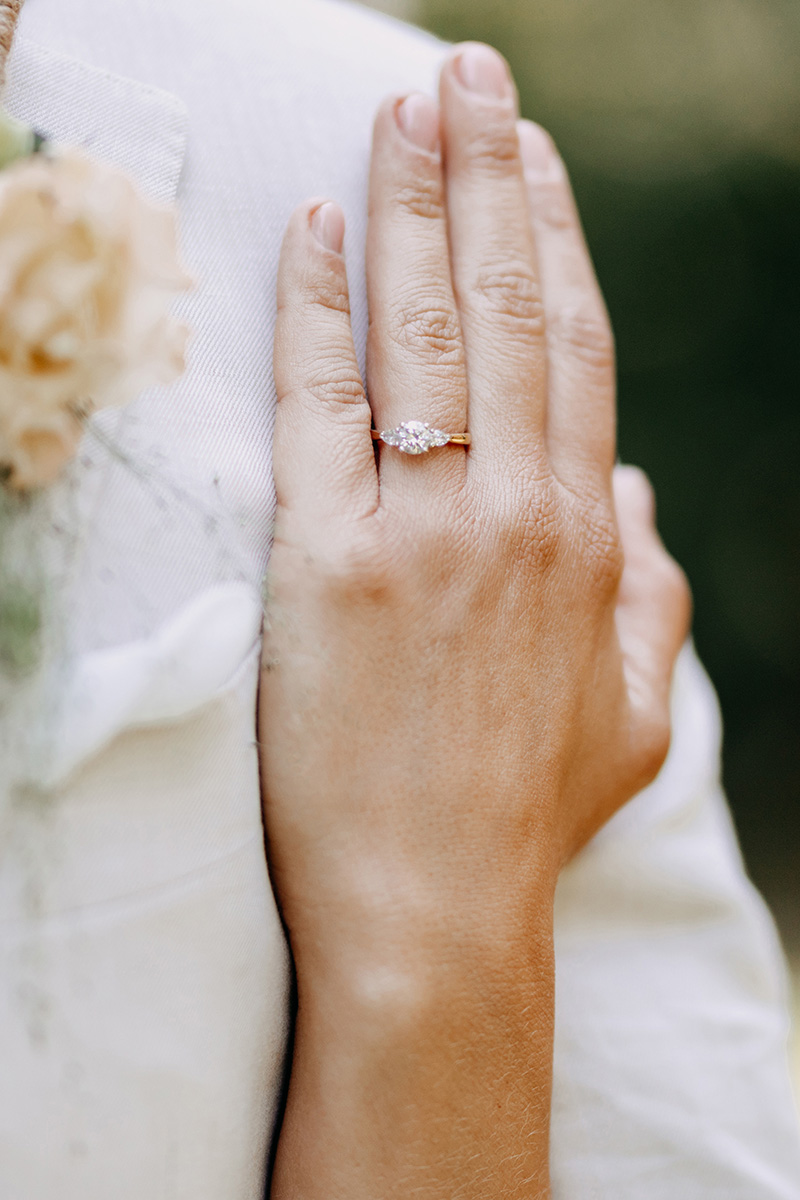
Yellow gold has made a strong return over the last few years, and for good reason. It is warm, classic and complements a wide range of skin tones. From a purely optical standpoint, yellow gold also does something useful. It can visually offset a diamond with a warmer colour grade (roughly I to K), because the surrounding warmth makes the stone's own tone less noticeable.
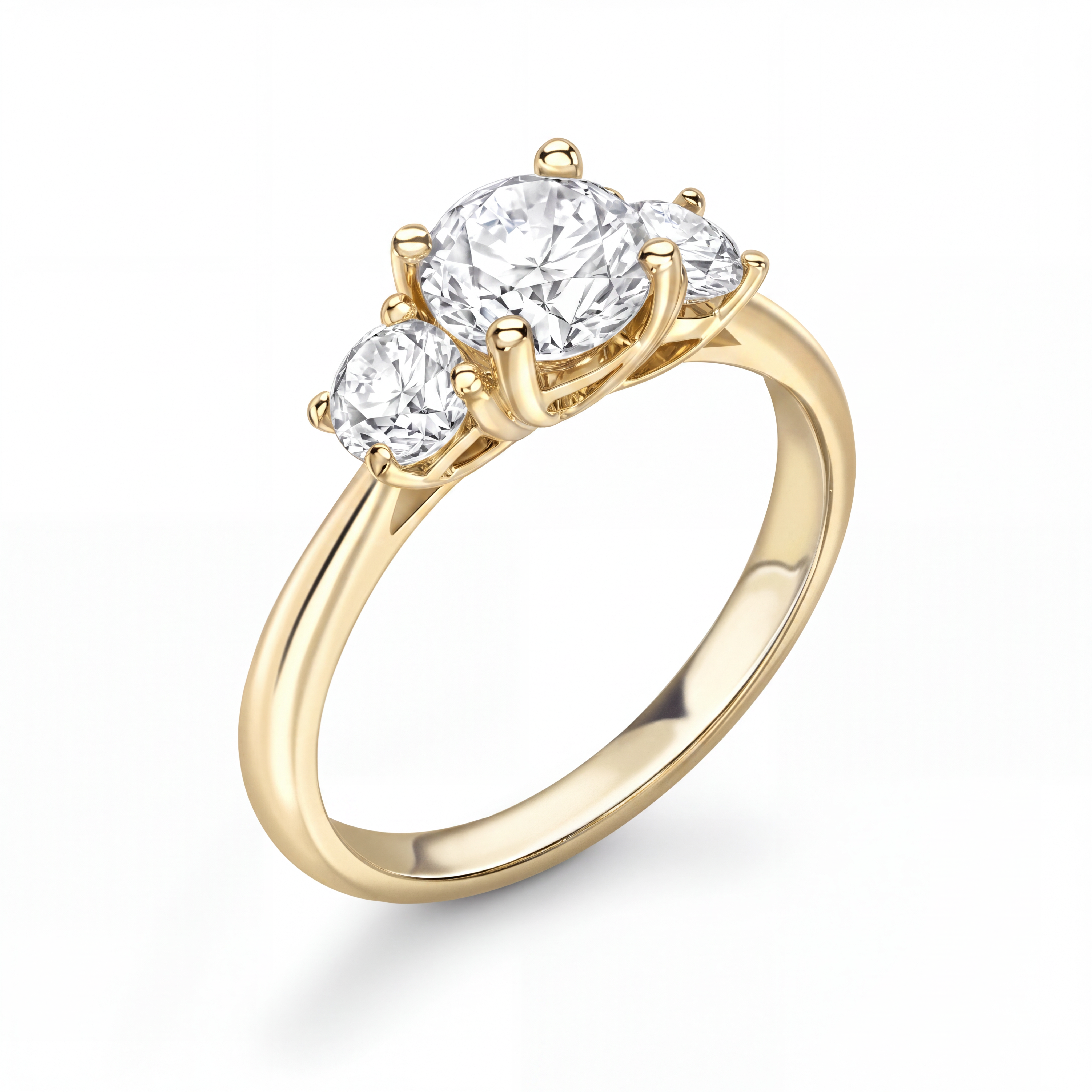
This is one of our favourite pieces of guidance to give clients who are working within a defined budget. Choosing a diamond with a slightly warmer colour grade, then setting it in yellow gold, often means access to a noticeably larger or higher-clarity stone for the same investment, without any visible compromise once it is on the hand.
Rose Gold: A Softer, Romantic Contrast
Rose gold sits somewhere between the two. Its pink-copper warmth creates a gentle contrast against a diamond rather than blending into it, which tends to make the stone appear crisp and bright by comparison. Rose gold pairs beautifully with colourless diamonds, where the contrast highlights the brilliance, and with warmer-graded diamonds, where the pink undertone softens rather than competes with the stone's own colour.
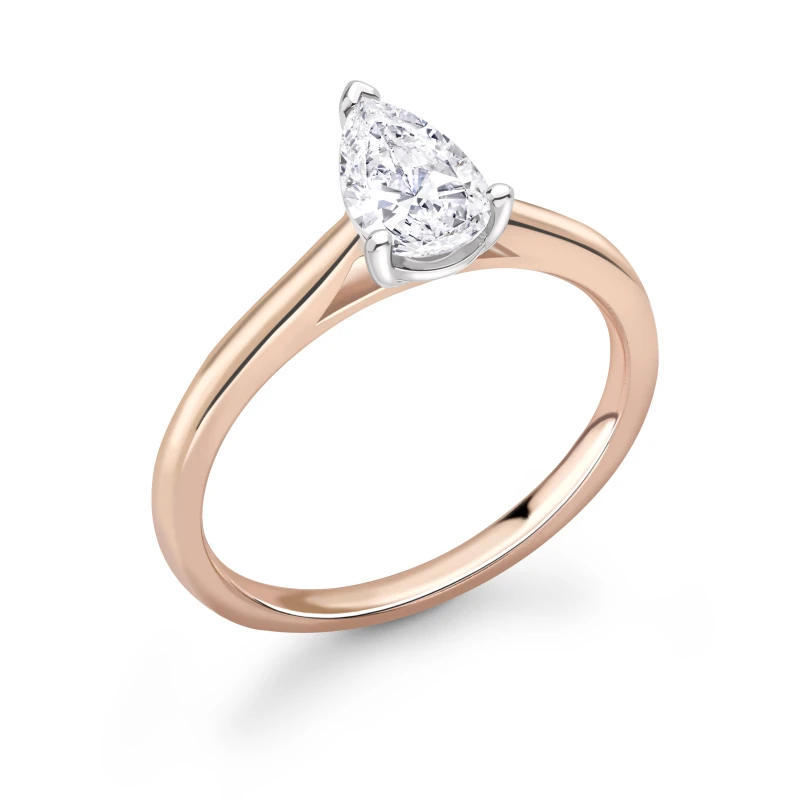
It's also worth noting that rose gold is the setting most forgiving of everyday wear. Its copper content makes it naturally harder and more resistant to scratching than yellow or white gold.
Mixed Metals: White Prongs on a Yellow or Rose Gold Band
The band is not the only metal touching your diamond. The prongs, the small claws holding the stone in place, sit right at the edge of it, and their colour matters just as much as the band's, sometimes more.
This is why many rings use white gold or platinum prongs on a yellow or rose gold band. The coloured metal gives the ring its warmth and character, while the white prongs keep the immediate frame around the diamond neutral. The result is a stone that reads whiter than the overall band colour would suggest, without giving up the look of yellow or rose gold you love.
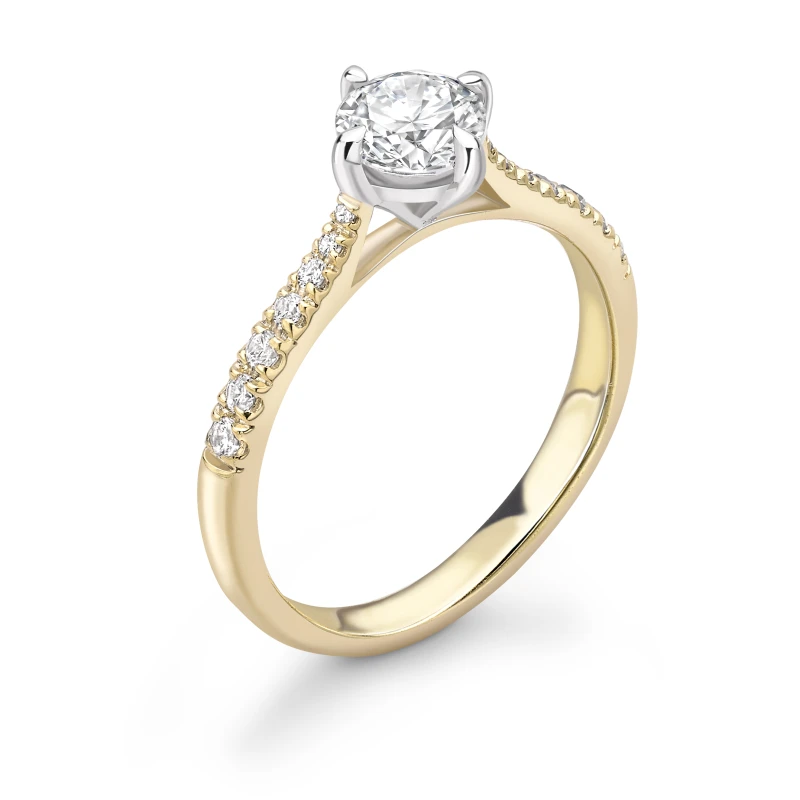
It's a genuine third option, not simply a choice between "the diamond suits white metal" or "the diamond suits yellow metal." If you already have your heart set on a yellow or rose gold ring but want the diamond itself to look as bright and colourless as possible, this is often the answer.
How Diamond Colour Grade Interacts With Metal Choice
As a general guide:
D to F (colourless). Looks exceptional in any metal. Platinum and white gold showcase the brilliance most purely.
G to H (near colourless). Versatile across all metal colours. A matter of personal preference rather than optical necessity.
I to J (near colourless, faint warmth). Yellow or rose gold will visually balance the tone beautifully.
K and below (faint yellow). Yellow gold is the most flattering choice, as the setting's warmth complements rather than exposes the stone's own colour.
None of this is a hard rule. It's a starting point for a conversation, and the right pairing always depends on the individual stone in front of us.
Why We Ask About Metal Colour Early
Most clients already know whether they see themselves in yellow gold, white gold or platinum. It's usually one of the first things people are sure of, long before they have thought about colour grades or certificates. We are not trying to talk anyone out of that instinct. If anything, knowing it early makes us better at our job.
That is because your metal preference becomes one of the factors our gemologists weigh when sourcing diamonds for your budget. If we know you are set on yellow gold, we can confidently consider diamonds with a touch more warmth in the colour grade, stones that would show that warmth in a white setting but look exceptional in yellow. That often means a larger or higher-clarity diamond for the same budget, with no compromise once it is on the hand. If platinum or white gold is the plan, we weight the search toward the colourless end of the scale instead, where the stone does all the work on its own.
And if you already love the idea of a yellow or rose gold band but want the diamond to look as white as possible, we can factor that in too, by setting the stone in white prongs and widening what the diamond search can consider.
This is what we mean by a diamond-first process done properly. We still start with the diamond and create the piece around it, but everything we already know about you, your budget, your taste, your metal preference, shapes which diamonds we bring to the table in the first place.
If you'd like to see the range of settings we work with ready-to-set pieces for inspiration. We also do fully bespoke pieces. But the pairing itself, matching a specific stone to the metal and prongs that will flatter it most, is something we can really only show you in person, next to your own skin tone and in real light. So the best next step is simply a conversation. Tell us what matters to you, and we'll guide you from there.